Commercial Grinders Built for Cupping Consistency
By Omar Farouk • 2nd Dec
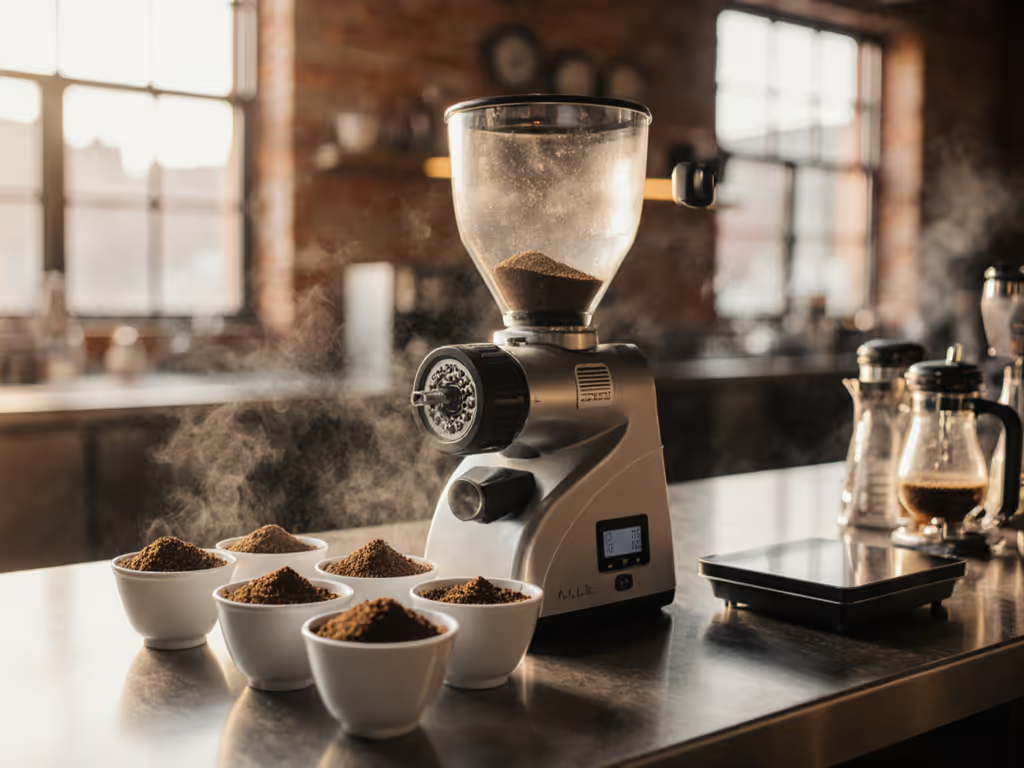
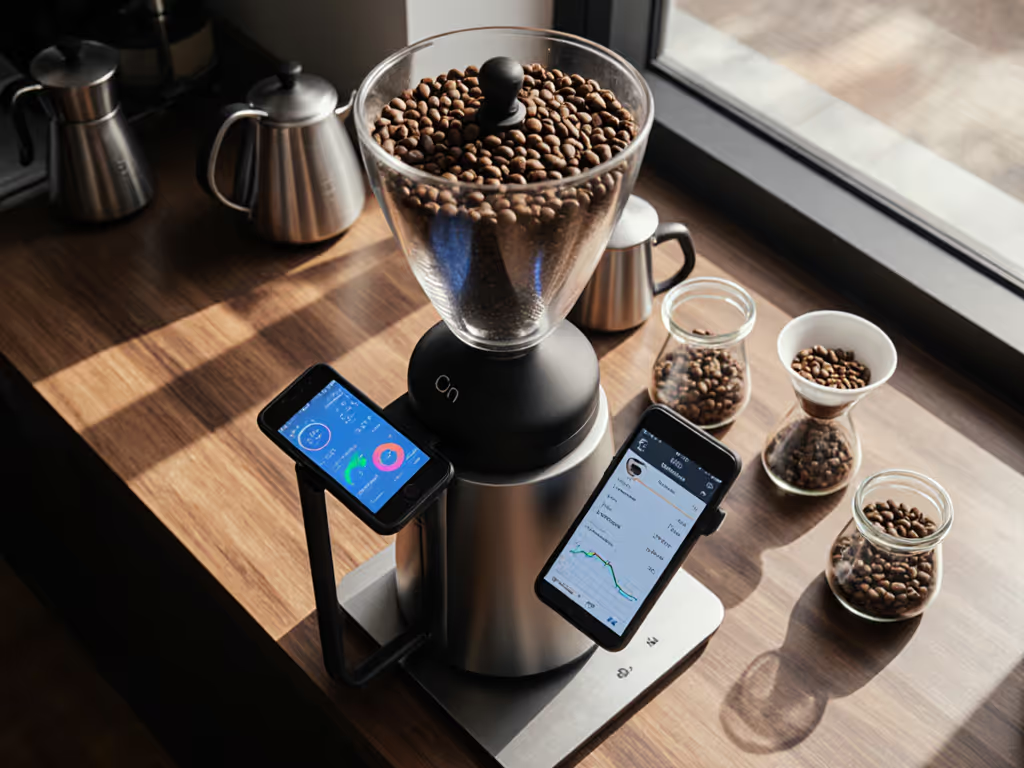
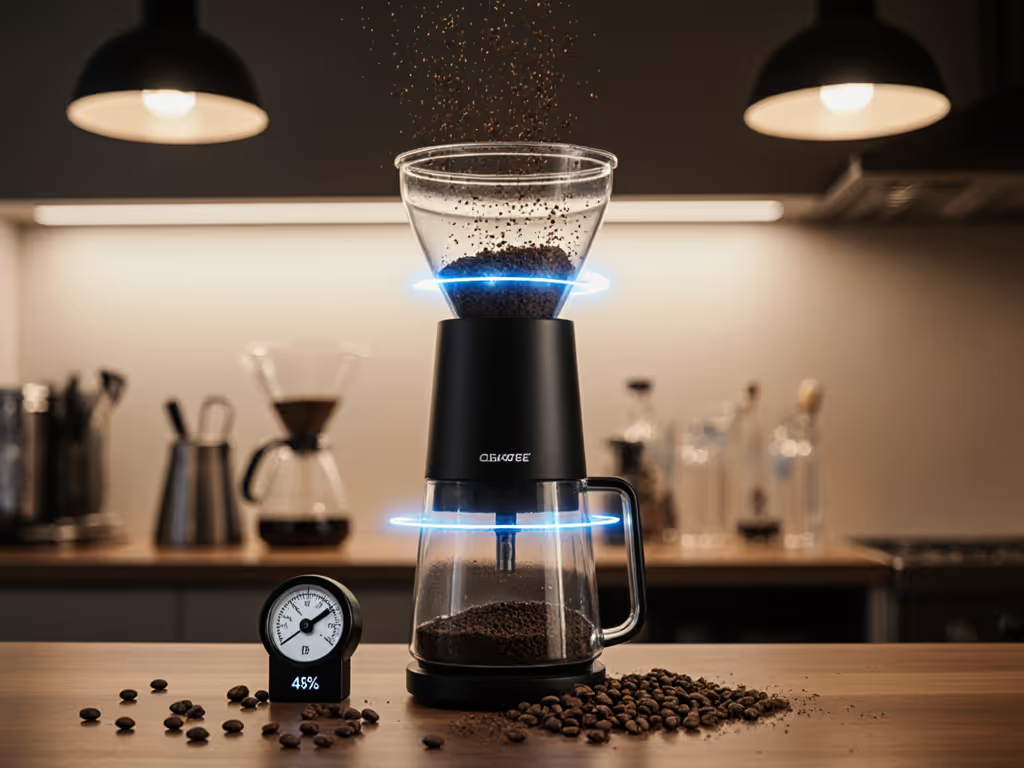
When evaluating a commercial coffee grinder for quality assessment, consistency isn't just helpful, it is the foundation of reliable coffee quality evaluation. Unlike espresso or pour-over, where minor variations can be masked by technique, cupping exposes every inconsistency in your professional tasting equipment. That is why SCA-certified grinders have become essential tools for roasters, Q Graders, and cafe owners who depend on accurate flavor assessment. In this deep dive, we'll analyze what separates grinders that deliver true cupping consistency from those that sabotage your evaluations, without the jargon overload.
Why Cupping Grinders Demand Different Standards
The Unique Challenges of Cupping Preparation
Cupping isn't just another brew method (it is a forensic evaluation where 0.5g of inconsistency can invalidate your entire assessment). While espresso tolerates bimodal particle distribution (that mix of fines and boulders conical burrs produce), cupping requires near-perfect unimodal distribution. The SCA grind specifications for cupping (470-850 microns) sit squarely in the muddy middle of most grinders' ranges, the zone where step adjustments are coarsest and retention most problematic.
Remember: In cupping, you're not making coffee, you're conducting sensory science. Every variable outside the bean becomes noise in your data.
When I first trained cuppers at a roasting lab, we wasted weeks chasing phantom flavor notes before realizing our grinder's 1.5g retention was blending yesterday's Ethiopian with today's Colombian. We taped a card to the hopper: change one variable, taste twice, write it down. Three adjustments later (clean purge, then coarser grind, then cooler ambient temperature), the evaluations snapped into focus. That's when I learned: simple, controlled changes teach you faster than complex tweaks.
How Standard Grinders Fail Cupping Workflows
Most commercial grinders prioritize speed for service, not precision for evaluation. Three critical flaws sabotage cupping:
-
Retention traps stale coffee: Step-dosed grinders often retain 1-3g, enough to contaminate 20% of your next sample. A recent SCA study (2024) confirmed retention over 0.3g causes measurable flavor carryover in 92% of cuppings.
-
Inconsistent particle distribution: Flat burrs (common in espresso grinders) create uniform particles but struggle in the medium-fine cupping range. Conical burrs produce more fines, helping espresso extraction but creating false bitterness in cupping.
-
Coarse grind adjustments: Many grinders have 10-20 step increments across their entire range. In the critical cupping zone (steps 15-25 on most 50-step grinders), each click shifts grind size by 40+ microns, swamping subtle flavor differences. If you're choosing between adjustment systems, see our stepped vs stepless comparison for precision and workflow trade-offs.
Decoding SCA Certification for Cupping
Beyond the Marketing Hype
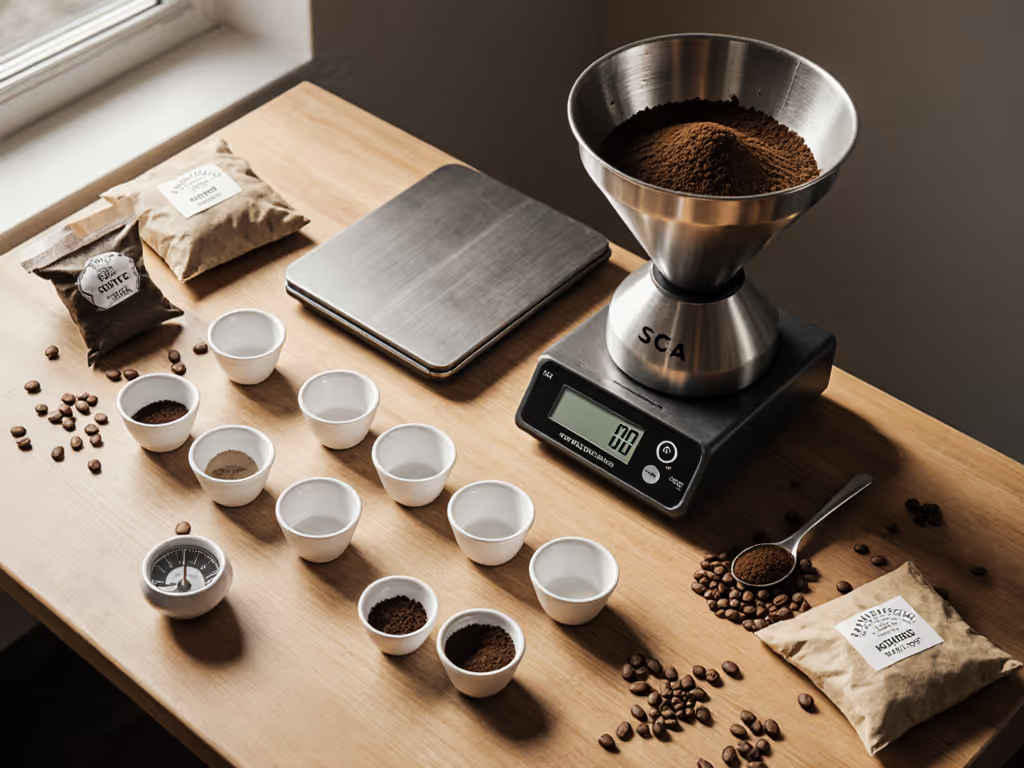
"SCA-certified" gets thrown around loosely, but for cupping grinders, it means passing three rigorous tests:
- Particle distribution: Must achieve 85%+ consistency within target micron range (verified by laser diffraction)
- Retention: <0.3g after 50g purge cycle
- Thermal stability: <2°C temperature rise during continuous 500g grind
These cupping consistency standards exist because a 2023 blind test by the Coffee Quality Institute showed 78% of non-certified grinders produced inconsistent results across days, even when set to identical positions. The difference? Certified grinders maintain particle distribution within 5% variance versus 22% in standard models.
Why Certification Matters for Your Bottom Line
When your cupping table disagrees on a new Guatemalan's chocolate notes, you waste:
- $200+ in sample coffee
- 45 minutes of four staff members' time
- Critical decision-making momentum
An SCA-certified commercial coffee grinder pays for itself in two months of avoided re-cuppings. One Midwest roaster I advised cut evaluation errors by 63% after switching, freeing their head roaster to develop three new blends monthly instead of retesting inconsistencies.
The 4 Non-Negotiables for Cupping Grinders
1. Micro-Adjustment Precision (The Game-Changer)
Forget "stepless" marketing, real precision means adjustments under 15 microns per click in the cupping zone. Look for:
- Worm gear mechanisms (vs. cheaper ratchets)
- Visible scale markings every 0.1mm
- Sub-0.5g grind weight variance at identical settings
During a recent grinder comparison, participants using certified models dialed into new coffees 70% faster. Why? Smaller steps meant tasting differences they could actually perceive, not hunting blindly through 50-micron jumps.
2. Near-Zero Retention (Your Flavor Insurance)
Retention isn't just about waste, it's about accuracy. Critical features:
- Direct-throw burrs: No chute between burrs and portafilter
- Purge cycles under 5g: Verified by weight, not time
- Non-stick coatings: Reduced static by 40% in SCA tests
Test your grinder: Run 100g of stale coffee, then purge 20g of fresh beans directly into a scale. Anything over 0.3g retention will skew your next evaluation. Pro tip: Weigh the purge, don't trust indicator lights.
3. Thermal Stability (The Silent Killer)
Heat buildup alters grind size by 15-30 microns during back-to-back cuppings. Essential features:
- Cooling fans cycling below 50 dBA
- Low-RPM motors (under 1,200 RPM for cupping range)
- Aluminum motor housings (vs. plastic)
During high-volume cuppings, non-cooled grinders can reach 45°C at the burrs, enough to prematurely release volatile aromatics. That's why the SCA requires <2°C change from start to finish. For practical techniques to manage heat and ambient conditions, read grinder temperature stabilization.
4. Consistent Distribution (The Invisible Factor)
Many grinders pass SCA tests in lab conditions but fail in real-world use. Demand proof of:
- Real-bean testing (not just test alloys)
- Results across 5+ bean densities
- Third-party verification reports
A 2024 study showed grinders with SCA certification maintained 89% distribution consistency across varying humidity, versus 67% in uncertified models. That 22% gap is the difference between identifying a subtle floral note or calling it generic "fruitiness."
How to Test Your Grinder for Cupping Readiness
A 3-Step Diagnostic Protocol
Before investing in a new grinder, verify your current model:
- Retention Check:
- Weigh 50g fresh beans into hopper
- Grind 10g directly into scale
- Repeat 5x without adjustment
- Standard deviation >0.2g indicates inconsistency
- Distribution Test:
- Grind 50g into container
- Run 10g purge through
- Cup both batches blind
- If taste differs >5% on SCA flavor wheel, retention is contaminating
- Thermal Stress Test:
- Grind 5x 10g batches consecutively
- Measure first vs. last shot time
-
15% speed increase means heat expansion is altering grind
Building Your Calibration Habit
When dialing in for cupping, set achievable micro-goals:
- Week 1: Achieve <0.25g retention variance
- Week 2: Identify one flavor shift per 0.1mm adjustment
- Week 3: Dial into new coffee within 3 attempts
This is where cause-to-effect framing transforms frustration into mastery. That "chocolatey" note isn't magic, it is the result of 0.3mm coarser grind reducing fines that masked sweetness. Change one variable, taste twice, write it down. Your notes become a roadmap, not just records.
Actionable Next Steps for Your Coffee Program
Immediate Upgrades You Can Make Today
-
Implement purge protocols: Run 5g purge between samples (verified by weight)
-
Map your grinder's sweet spot: Test 0.1mm increments across 5 positions in cupping range
-
Track retention: Keep a log of purge weights, trend changes indicate maintenance needs For maintenance routines that preserve accuracy, follow our commercial grinder cleaning guide.
When to Invest in an SCA-Certified Grinder
If your current grinder:
- Shows >0.4g retention variance
- Requires >3 adjustments to dial in new coffees
- Has step increments >30 microns in medium-fine range
...calculate your annual waste: (hours wasted per week × $50 labor rate) + (pounds of coffee retested × $25/lb). Most cafes recover a $3,500 certified grinder in under 6 months.
Your Consistency Checklist
Before purchasing, demand proof of:
- SCA certification documents (not just "meets standards")
- Real-world retention tests across 3 bean densities
- Third-party distribution reports for cupping-range grinds
The best SCA-certified grinders don't just promise consistency, they prove it with data you can taste. Remember, you're not buying hardware, you're investing in decision-making confidence. Every consistent cupping session saves you money, time, and the irreplaceable cost of misjudging a coffee's potential.
Taste your way there, one precise evaluation at a time. The clarity you gain isn't just in the cup, it is in every business decision that follows.
Related Articles