Home Roast Grinding: Ideal Timing for Consistent Coffee
By Omar Farouk • 8th Jan
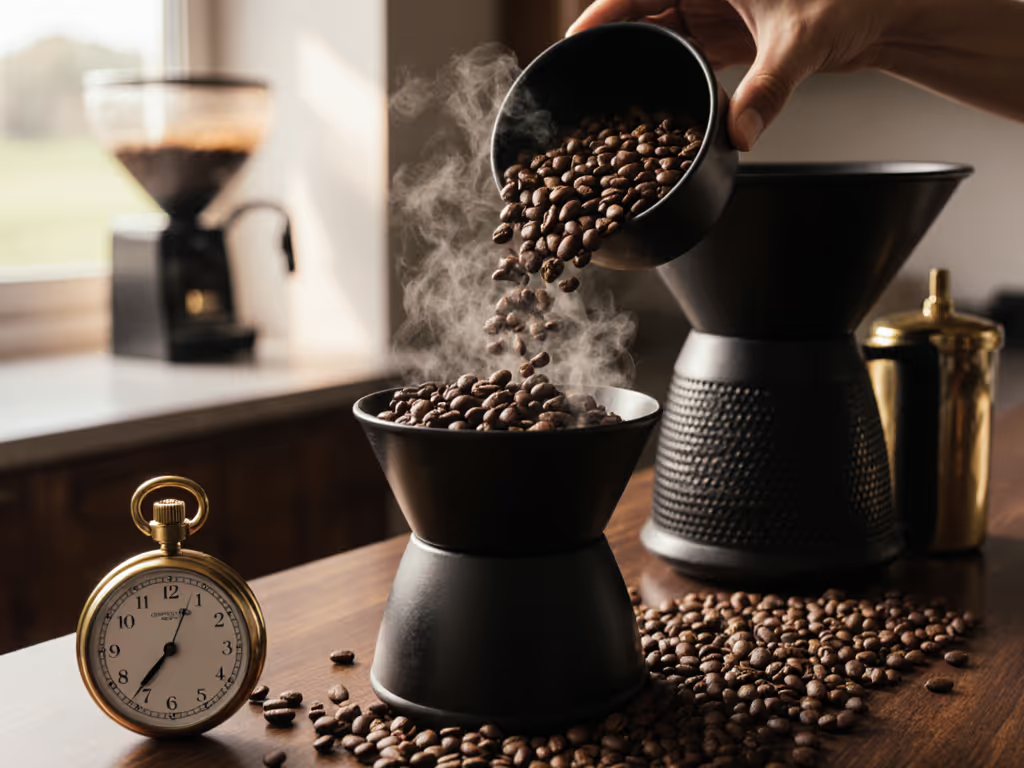
When you invest in the best home coffee grinder or even a modest commercial coffee grinder, one truth becomes clear: your machine can't compensate for rushing the post-roast process. I've watched countless home roasters (myself included) waste stunning beans by grinding too soon. The culprit? Ignoring coffee's natural degassing period. Today, we'll cut through the confusion with actionable timing guidelines that turn your home roasting workflow into a repeatable ritual. Start simple: treat fresh beans like a finicky recipe, not a finished product.
Why Freshly Roasted Coffee Isn't Ready to Grind
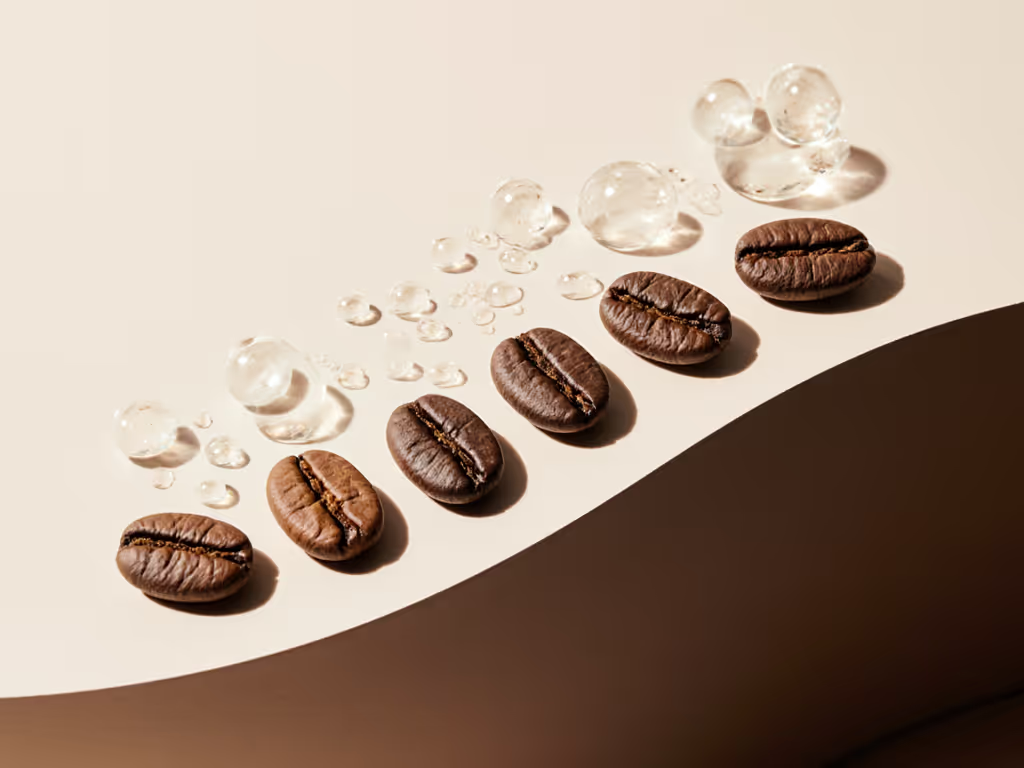
Freshly roasted beans aren't just hot; they're actively exhaling carbon dioxide (CO₂). This isn't trivial science; it's the reason your espresso spits like an angry cat or your pour-over tastes sourly hollow. During roasting, CO₂ builds pressure inside beans. Post-roast, it releases in stages:
- Days 0-1: Explosive off-gassing (20-30% of total CO₂). Grinding now floods your puck or slurry with gas bubbles, blocking water flow and extraction.
- Days 2-5: Gradual release (60-70% remaining). Ideal for most filter methods.
- Days 6-14+: Stable equilibrium (final 5-10%). Peak espresso window.
A recent study by the SCA confirmed that grinding within 24 hours of roasting increases channeling risk by 40% in espresso, because those trapped CO₂ pockets force water through weak spots, creating uneven extraction and bitter notes.
Think of it like proofing sourdough: skip the rest, and your loaf collapses. For a deeper look at how particle size and extraction interact, see our coffee extraction science guide. Rushing grinding ignores cause and effect. Change one variable, taste twice, write it down. That's how you learn your beans' rhythm.
Your Practical Timing Guide (By Brew Method)
For Filter Coffee (V60, Chemex, etc.)
Wait 48-72 hours post-roast. Why? Filter methods use gentle gravity flow. Excess CO₂ creates turbulence in water, leading to under-extracted highs (sourness) and over-extracted lows (bitterness). I once rushed a light Ethiopian V60 at 36 hours. Result? A tea-like cup with zero sweetness. By day 3, the same roast sang with stone-fruit clarity. Your micro-goal: brew on day 3, then day 5. Note the difference in body and balance. If you're unsure about grind targets per method, keep our grind size by brewing method chart handy.
For Espresso
Wait 5-9 days for light-to-medium roasts; 3-5 days for dark roasts. Espresso's 9-bar pressure forces water through densely packed coffee. If CO₂ hasn't dissipated, it expands during extraction, blowing channels through your puck. This is not theory. I've seen it ruin $20 single-origin coffees. Dark roasts degas faster (due to fractured cell structure), so they're ready sooner. Track this cause-to-effect: shorter wait = uneven shots; longer wait = flat, stale crema. For consistent results across different roast densities, learn how to adjust for roast density.
For Immersion (French Press, AeroPress)
Wait 24-48 hours. These methods trap CO₂ bubbles in the slurry, but since water isn't forced through coffee, off-gassing is less disruptive. Still, grinding too early mutes nuanced flavors. Set a timer: brew at 24h, then 48h. Taste the shift from fizzy sharpness to rounded depth.
Fitting Timing into Your Home Roasting Workflow
The real pain point isn't knowing the windows; it's hitting them consistently. Here's how to build a repeatable rhythm without stress:
- Tag your beans: Label roasted dates on the bag with a marker. No app, no spreadsheet, just visible, physical tracking. (My cousin still uses the color-coded system we started on his kitchen counter.)
- Prep in batches: Roast on Sundays. Grind espresso beans Wednesday-Thursday; filter beans Friday-Saturday. This creates natural readiness cycles.
- Test one variable: If shots turn erratic, ask: "Did I grind too soon?" before blaming your grinder. Most "consistency issues" trace back to timing.
- Embrace the wait: During degassing, beans actually improve in sweetness. Patience isn't passive; it is active flavor development.
This isn't gatekeeping. Your $150 hand grinder can outperform a $3,000 machine if you respect the process. Start simple: Focus only on timing for your next roast. Ignore grind size, water temp, or tamping pressure. Master the wait first.
Why Grinder Choice Still Matters (Strategically)
Your grinder doesn't replace timing discipline, but the right tool minimizes errors during this fragile phase. During the degassing period, beans are oilier and more staticky. Here's where technique meets hardware:
-
Low retention matters: Beans from days 2-5 cling to grinder burrs more aggressively. A grinder with <0.5g retention (like many stepless models) reduces stale "ghost shots" from old residue.
-
Consistency fights CO₂ chaos: A true best home coffee grinder produces uniform particles even with volatile fresh beans. Commercial units often win here with larger burrs (less heat, smoother flow), but home models can match them if dialed correctly after degassing.
-
Avoid pre-infusion confusion: Don't mistake degassing symptoms for machine issues. If your espresso sputters, first check roast age, not pump pressure.
Remember: Even a commercial coffee grinder can't rescue beans ground too early. Precision hardware amplifies good timing, it doesn't fix bad timing.
Your Actionable Next Step
This weekend, roast (or buy) a half-pound of beans. Change one variable, taste twice, write it down:
- Day 3: Brew a pour-over. Note acidity and clarity.
- Day 5: Repeat. Compare body and sweetness.
- Day 7: If doing espresso, pull a shot. Observe crema stability.
Use a basic notebook, no fancy app needed. If you're new to systematic adjustments, follow our grinder dial-in guide. Track just taste and texture. In two weeks, you'll have your evidence-based timing window. No more guessing. No more wasted beans. Just repeatable, confident brewing.
The heart of home roasting isn't the machine, it's the mindful pause between roast and grind. Honor that space, and your coffee's true character will emerge. Start simple, trust the process, and let the beans speak for themselves.
Related Articles