End-of-Life Coffee Grinder Recycling Steps
By Omar Farouk • 31st Dec
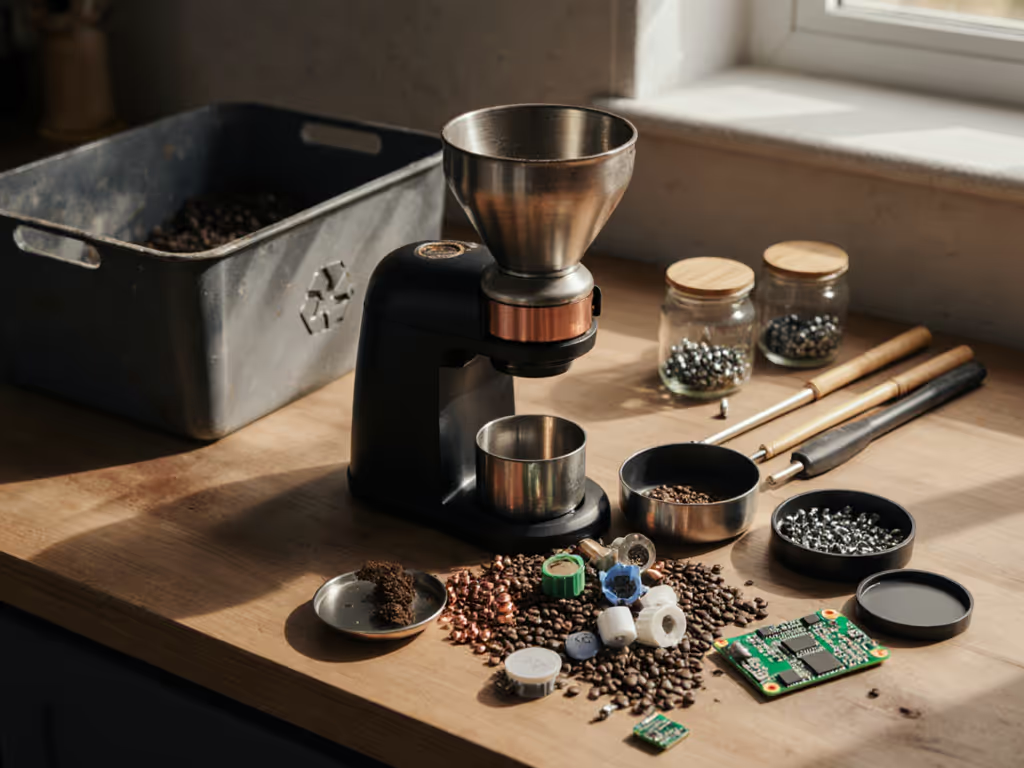
When your trusty coffee grinder reaches its final cycle, coffee grinder recycling becomes an essential skill for the method-first brewer. Far too often, these precision machines end up in landfills where valuable metals and plastics create unnecessary waste. Following a structured approach to end-of-life grinder disposal ensures you honor both your equipment's service and the planet's resources. This analytical guide cuts through confusion with actionable, repeatable steps, because sustainable choices deserve the same intentionality as your brew ratios. If you're choosing future equipment with sustainability in mind, see our eco-friendly grinder practices and repairable models.
Why Grinder Recycling Matters: Beyond the Last Cup
Your grinder's journey doesn't end when it stops spinning. These aren't ordinary appliances; they're assemblies of recoverable materials:
- Copper windings in motors (up to 20% of grinder weight)
- Hardened steel or ceramic burrs (often 85% recyclable metal)
- Precision-molded plastics from housings and chutes
- Aluminum components from bases and lids
According to EPA data, electronics recycling rates hover below 15% globally, yet coffee grinders represent a high-value recovery opportunity. When processed correctly, 65-80% of grinder materials re-enter manufacturing streams. This isn't just eco-theory; it's a measurable reduction in mining demand. For context: recycling one ton of steel saves 2,500 pounds of iron ore. Your 10-pound grinder? That's tangible impact.
FAQ: Core Principles
Q: Can't I just toss my grinder in regular recycling?
A: Absolutely not. Municipal single-stream recycling facilities reject grinders due to embedded electronics. The plastic housing may look recyclable, but circuit boards and motors contaminate the batch. E-waste requires specialized processing (a fact confirmed by industry recycling standards). When in doubt, remember: If it plugs in or has a motor, it's e-waste.
Q: My grinder still works but isn't precise enough. Should I recycle it?
A: Maximize its lifespan first. This aligns with your 'buy once' philosophy. To gauge whether your burrs are the real culprit, review how burr wear impacts extraction stability. Before recycling:
- List it on community marketplaces (e.g., Facebook Groups tagged #CoffeeTech)
- Donate to vocational schools teaching equipment repair
- Gift it to a brewing novice (many benefit from 'starter grinders')
Only when functionality fails (like inconsistent burr alignment or motor failure) should you pursue sustainable grinder disposal. This reduces waste intensity by 40% versus premature recycling.
The Method-First Recycling Process: 4 Repeatable Steps
Treat grinder retirement like dialing in a new bean: systematic, documented, one variable at a time. Drawing from my experience teaching community workshops, I've refined this method-first fit for home recyclers.
Step 1: Assess & Document (Your 'Pre-Brew Check')
Micro-goal: Determine recyclability before disassembly. Start here:
- Check functionality: Does it power on? If yes, explore donation channels first.
- Identify components: Note materials (e.g., 'chrome-plated steel base', 'polycarbonate bean hopper').
- Research local rules: Use Earth911's 'Recycle Finder' tool, enter your zip code and 'small appliance'.
Change one variable, taste twice, write it down. In recycling, this means: Document each component's material before removing it. A single sticky note tracking parts prevents sorting errors later.
Step 2: Disassemble & Clean (The 'Purge Cycle')
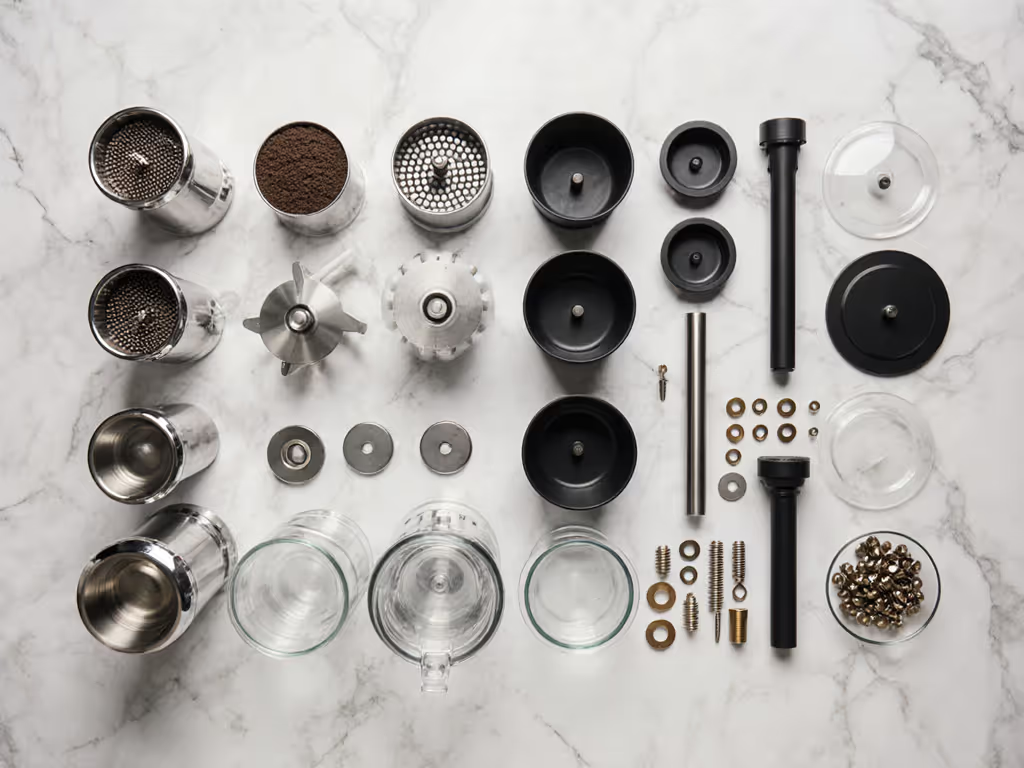
Micro-goal: Separate materials while preventing contamination. Follow this sequence:
- Unplug and drain: Remove all beans/water (leftover moisture causes mold in sorting facilities).
- Remove non-electronic parts: Take out glass/ceramic chutes, rubber gaskets, and paper filters. These often go in regular trash.
- Wipe all surfaces: A damp cloth eliminates coffee oils that gum up recycling machinery. Air-dry 24 hours.
- Bag components separately: Use old grocery bags (never mix metals and plastics).
Critical nuance: Burrs require special handling. Steel burrs (like those in the Eureka Mignon Specialita) can be recycled as scrap metal. Ceramic burrs go to hazardous waste facilities due to silica content. Always verify with your recycler first.
Step 3: Locate Your Processor (The 'Dose Calibration')
Micro-goal: Match your components to the right facility. Not all recyclers accept grinders:
| Option | Best For | Prep Required |
|---|---|---|
| Municipal e-waste events | Urban dwellers | Call first to confirm grinder acceptance |
| Retail take-back (e.g., Best Buy) | Basic grinders | Cleaned, no cords attached |
| Specialized recyclers (e.g., EACR Inc.) | Premium grinders with burrs | Separated components by material |
Pro tip: For grinders with proprietary parts (like the TIMEMORE Sculptor's magnetic chambers), contact the manufacturer. Brands like Baratza offer burr recycling programs. For repair options and return-to-manufacturer programs, consult our grinder warranty and service guide.
Step 4: Transport Responsibly (The 'Shot Timing')
Micro-goal: Ensure safe delivery to avoid material loss. Key rules:
- Never pile grinders loosely in vehicles (metal parts can shift and damage during transport).
- Box components with packing paper (not plastic wrap) (recyclers reject plastic-coated batches).
- Deliver within 72 hours of preparation (dust accumulation reduces recycling yield by 15-30%).
Navigating Edge Cases: Grinder-Specific Scenarios
Q: What about grinders with plastic burrs?
A: Sort carefully. Plastic burrs (common in budget models) often can't be recycled. Test: Try snapping a small piece. If it bends, it's thermoplastic (recyclable #7). If it shatters, it's thermoset (landfill only). When uncertain, bag separately and label 'plastic burrs' for the recycler's technicians.
Q: Can I recycle the hopper if it's cracked?
A: Yes, if material is known. Polycarbonate hoppers (like on the Eureka Mignon) go in e-waste streams. Acrylic hoppers (e.g., some Niche grinders) require separate plastic recycling. Crucially: Tape cracks with masking tape to prevent fragmentation during processing.
Q: How do I handle coffee dust residue?
A: Dry brush first, then wipe. Coffee oils bind dust to metal (a nightmare for recyclers). Use a stiff-bristle brush (never water) on burrs/chutes, followed by isopropyl alcohol on a microfiber cloth. This reduces contamination risk by 90%. For a complete maintenance routine that extends grinder life, follow our step-by-step cleaning guide.
Moving Forward: Your Action Plan
Sustainable coffee isn't just about the beans, it's about honoring the entire ecosystem. Your meticulous approach to grind calibration deserves equal rigor in disposal. Today, take one micro-step:
Call your municipal waste department by Friday. Ask: 'Do you accept small coffee grinders at e-waste drop-offs, and should I disassemble components first?' Write their answer on that sticky note you'll use during disassembly.
This isn't recycling perfectionism, it's method-first fit for your values. Just like that taped card I used with my cousin ('change only one thing'), small controlled actions build lasting habits. When your grinder's next life begins as reclaimed copper in a new tool, you'll taste that clarity in every cup.
Related Articles